

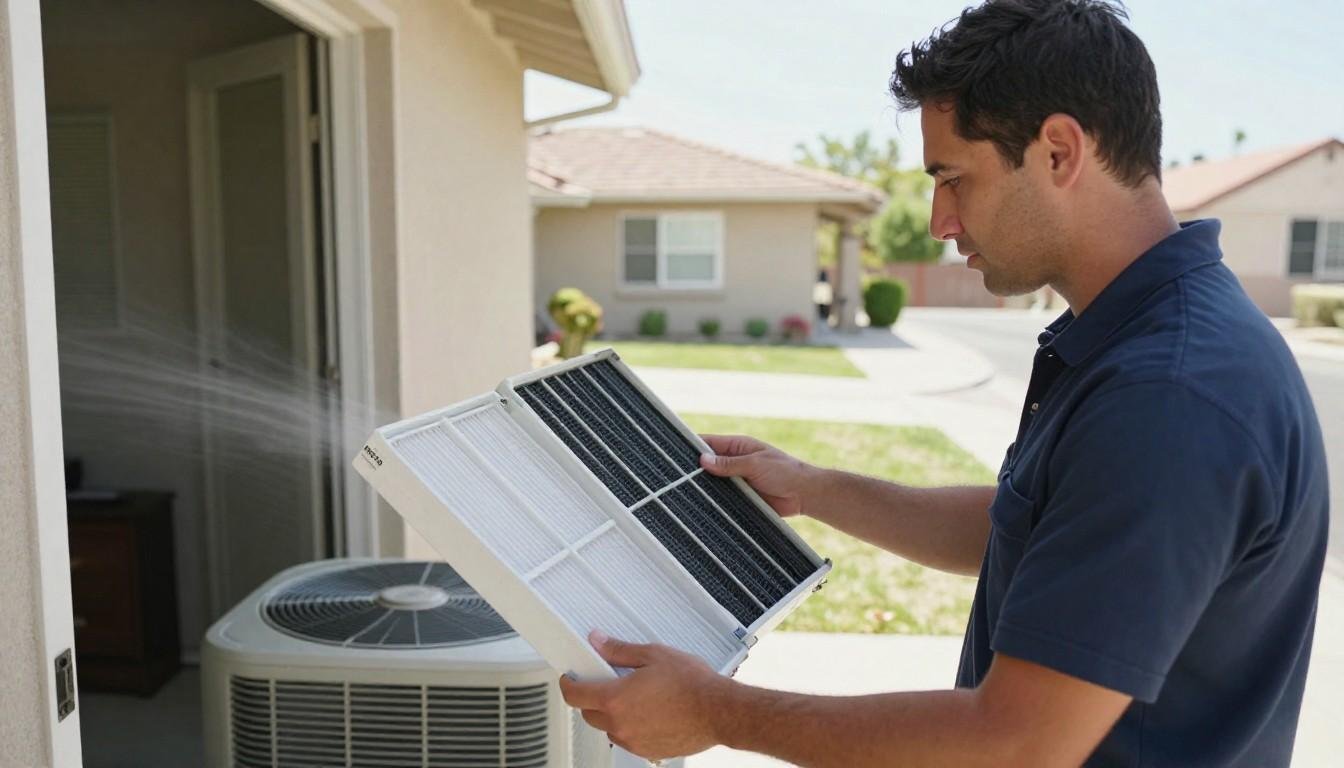
Indoor air quality matters more than ever, especially in Lake Elsinore where hot summers, dry conditions, wildfire smoke, and seasonal pollen all affect the air you breathe. If you or your family deal with allergies, asthma, or constant dust, your AC filter choice plays a big role. Yet many homeowners feel confused by terms like MERV, HEPA, and carbon filters. Each option works differently, and not every filter fits every AC system.
This guide breaks down what these filters actually do, how they perform in real homes and small businesses, and which options make sense for your existing AC system in 2026. You will learn what works, what does not, and how to make a practical choice without overspending or hurting system performance.
What Air Filters Do in AC Systems
The Basic Role of Air Filters
Your AC system pulls air from inside your home, cools it, and pushes it back through vents. Before that air moves across sensitive parts like the evaporator coil, it passes through an air filter. The filter traps particles like dust, pollen, pet dander, and debris.
This process protects your AC equipment and helps keep indoor air cleaner. Without a proper filter, dirt builds up inside the system. That buildup reduces airflow, lowers efficiency, and spreads contaminants through your home.
Why Filter Choice Matters
Not all filters work the same way. Some focus on large particles, while others capture very small ones. Higher filtration can improve air quality, but it can also restrict airflow if your system cannot handle it. Poor filter choices often lead to higher energy bills, uneven cooling, or frequent repairs.
If you want balanced comfort, healthy air, and steady performance, you need a filter that matches your AC system and your indoor air needs.
MERV Filters Explained
What MERV Ratings Mean
MERV stands for Minimum Efficiency Reporting Value. The scale runs from 1 to 16. The higher the number, the smaller the particles the filter can capture.
MERV 1 to 4 traps large debris like lint and dust
MERV 5 to 8 captures pollen and mold spores
MERV 9 to 12 traps finer particles like pet dander and smoke
MERV 13 to 16 captures very small particles, including bacteria
Most residential AC systems in Lake Elsinore work well with filters between MERV 8 and MERV 11.
Pros and Cons of MERV Filters
MERV filters offer a good balance of cost, airflow, and filtration. They are affordable and easy to replace. They also fit standard filter slots in most central AC systems.
The downside is that lower MERV ratings do not capture very fine particles. Higher MERV ratings can restrict airflow if the system fan is not designed for them. This can raise energy use and strain components.
When MERV Filters Are a Realistic Option
For most homes and small offices, MERV filters are the most realistic and practical option. A MERV 8 or MERV 11 filter improves indoor air quality without stressing the system. If you have mild allergies, pets, or dust issues, this range usually works well.
If you want help choosing the right filter for your system, a local technician from Air Conditioning Repair Lake Elsinore can inspect airflow and recommend a safe option.
HEPA Filters Explained
What HEPA Means
HEPA stands for High Efficiency Particulate Air. These filters capture 99.97 percent of particles as small as 0.3 microns. That includes fine dust, smoke particles, bacteria, and some viruses.
HEPA filters deliver excellent air cleaning, which is why hospitals and labs use them.
Pros and Cons of HEPA Filters
The biggest benefit of HEPA filters is their filtration power. They help people with severe allergies, asthma, or smoke sensitivity breathe easier.
However, HEPA filters create strong airflow resistance. Most residential AC systems cannot push air through a HEPA filter without major changes. Installing one without proper design often causes weak airflow, frozen coils, and system damage.
When HEPA Is Realistic for AC Systems
In most homes, a true HEPA filter does not fit inside a standard central AC system. To use HEPA filtration, you often need a separate whole-house air cleaner or a dedicated filtration unit with its own fan.
Portable HEPA air purifiers also work well for bedrooms or living areas. These options deliver clean air without harming your AC system.
If you plan upgrades, a professional evaluation matters. Systems from brands like Daikin, Lennox, or Trane may support advanced filtration with the right setup. You can learn more through brand-specific services such as Daikin air conditioning repair in Lake Elsinore or Trane AC repair in Lake Elsinore.
Carbon Filters Explained
What Carbon Filters Do
Carbon filters focus on gases and odors, not particles. They use activated carbon to absorb chemicals, smoke odors, cooking smells, and volatile organic compounds. These compounds often come from cleaning products, paints, and outdoor pollution.
Carbon filters work through adsorption, which binds gases to the carbon surface.
Pros and Cons of Carbon Filters
Carbon filters help with odors and chemical smells, which standard filters cannot remove. They improve comfort in homes affected by wildfire smoke or strong indoor odors.
The limitation is that carbon filters do not capture dust or allergens on their own. They must pair with a particle filter like MERV or HEPA to provide full air cleaning.
When Carbon Filters Are Realistic
Carbon filters work best as part of a layered approach. Many homeowners add carbon filter media alongside a MERV filter. This setup improves odor control while maintaining airflow.
Carbon filtration makes sense if you live near traffic, experience smoke events, or notice lingering indoor smells.
Comparing Filtration Options
Filtration Efficiency vs System Airflow
Higher filtration removes more particles, but it also restricts airflow. Poor airflow reduces comfort and raises energy use. This tradeoff matters in hot Lake Elsinore summers where AC systems run for long hours.
MERV 8 to 11 filters strike a safe balance. HEPA requires special equipment. Carbon filters add value but need a particle filter partner.
Cost Considerations
MERV filters cost the least and fit most systems
HEPA systems cost more and often need modifications
Carbon filters fall in the middle but require frequent replacement
Choosing the wrong filter can cost more in repairs than the filter itself.
Maintenance and Replacement Frequency
Most MERV filters need replacement every one to three months. Carbon filters often need replacement every three to six months. HEPA filters last longer but cost more to replace.
Regular maintenance prevents airflow problems and keeps filtration effective. You can learn how to avoid unnecessary charges in this guide on how to read an AC repair estimate and spot hidden fees or upsells.
New Developments and 2026 Trends
Smart Filtration and Sensors
Many modern systems now use air quality sensors that track dust levels, humidity, and filter condition. These tools help you replace filters at the right time and avoid airflow issues.
Smart thermostats and connected systems alert you when filtration performance drops.
Hybrid Filtration Approaches
Hybrid systems combine MERV filters, carbon layers, and UV lights. Some setups work well, while others add cost without clear benefit. UV lights help reduce microbial growth on coils but do not replace filters.
Air Quality Standards and Health Data
Health data continues to link indoor air quality with respiratory comfort and sleep quality. In 2026, many homeowners prioritize filtration upgrades along with routine AC maintenance. This focus aligns with broader topics like how AC maintenance improves indoor air quality for allergy and asthma sufferers.
Practical Recommendations for Homeowners
Assess Your Indoor Air Quality Needs
Start by identifying your main concerns. Do you struggle with allergies, pets, smoke, or odors? Do you have asthma or sensitive lungs? These factors guide filter choice.
Choose the Right Filtration Level
For most homes, a MERV 8 or MERV 11 filter works well. Add carbon filtration if odors or smoke cause issues. Consider HEPA only with professional guidance or as a separate unit.
Work With a Professional
An HVAC professional checks airflow, duct condition, and system capacity before recommending upgrades. This step prevents damage and wasted money. You can contact a local technician through the contact page to schedule an evaluation.
Cost vs Value: What to Expect Financially
Real Filter Costs (2026 Estimates)
MERV filters range from low to moderate cost
Carbon filters cost more and need regular replacement
HEPA systems require higher upfront investment
Installation and Retrofit Costs
Some filtration upgrades need duct changes or stronger fans. Costs vary by system age and brand. Financing options may help if upgrades coincide with replacement planning. You can explore payment strategies in this guide on zero down and low interest options for replacing an old AC system.
Long-Term Value
Proper filtration improves comfort, protects equipment, and may reduce allergy symptoms. It also helps your AC system run cleaner and last longer, which saves money over time.
Conclusion
MERV, HEPA, and carbon filters all serve different purposes. For most Lake Elsinore homes, MERV filters offer the best balance of air quality, airflow, and cost. Carbon filters add odor and smoke control, while HEPA works best as a separate solution or with specialized systems.
The right choice depends on your health needs, your AC system design, and your budget. Professional guidance ensures your filter upgrade improves air quality without harming performance.
FAQs — Homeowner Questions Answered
Most systems cannot handle HEPA filters without modifications. A professional evaluation helps determine safe options.
MERV 8 to MERV 11 usually works well without restricting airflow.
Yes, carbon filters reduce smoke odors and gases when paired with a particle filter.
MERV filters need replacement every one to three months. Carbon filters need more frequent changes.
It can if airflow drops. Choosing the right filter prevents this issue.
They help track filter performance and indoor air conditions, which supports consistent comfort.
Frequent dust, allergy symptoms, musty odors, or uneven airflow often point to filtration or maintenance issues.