

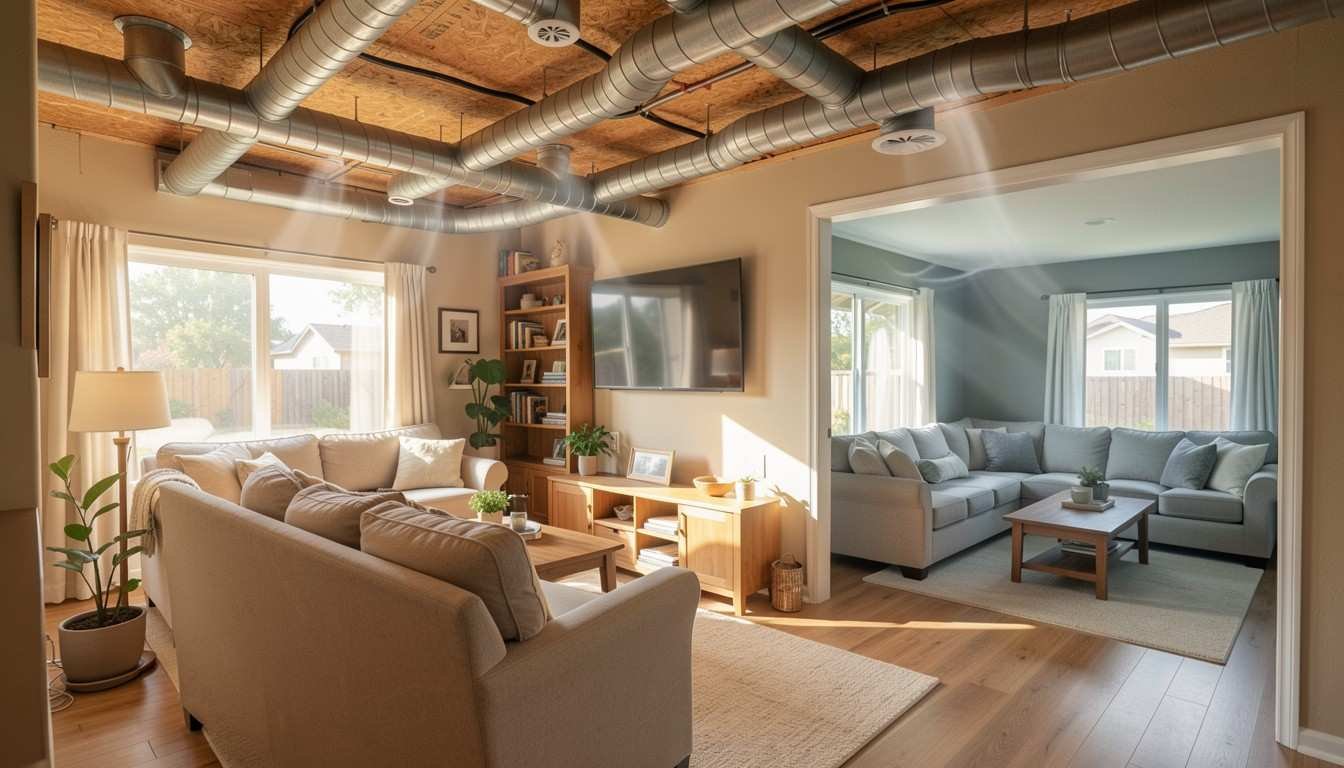
You feel it every day. One room stays too warm while another feels cold, even though your AC keeps running. You may assume your air conditioner is failing. In many Lake Elsinore homes, that assumption turns out to be wrong. The real problem often sits inside the walls and attic. Poor duct design causes uneven airflow that creates hot and cold spots, even when your AC works as it should.
In warm climates like Lake Elsinore, ductwork design plays a major role in indoor comfort. Builders often focus on speed and cost. As a result, duct systems do not always match the layout or cooling needs of the home. This article explains how duct design affects comfort, how to spot the warning signs, and what solutions make sense before you replace your AC.
How Air Distribution Works in Central AC Systems
The Role of Ductwork
Your AC does not cool rooms directly. It cools air, then pushes that air through ductwork. Supply ducts deliver cooled air into each room. Return ducts pull warm air back to the system so the cycle can repeat. When ducts match the home layout, air flows evenly.
When ducts fail to deliver balanced airflow, some rooms receive too much air while others receive too little. This imbalance leads to temperature swings that your thermostat cannot fix.
How HVAC Systems Should Work in Theory
In an ideal setup, every room receives the right volume of air. Temperatures stay consistent across the home. The AC runs steady cycles instead of long nonstop operation. Energy use stays predictable. Comfort feels even. When duct design falls short, none of those benefits occur.
What Causes Hot and Cold Spots
Poor Duct Design Basics
Poor duct design shows up in several common ways:
Ducts that are too small restrict airflow
Ducts that are too large reduce air pressure
Long duct runs lose cooling power
Sharp bends reduce airflow speed
Poor placement misses key living areas
These issues often exist from day one in many homes.
Other Contributing Factors
Design issues combine with other problems, such as:
Leaky duct joints
Missing duct insulation
Blocked or crushed ducts
Dirty filters and coils
When multiple problems stack together, comfort suffers fast.
Signs That Duct Design, Not the AC Unit, Is the Root Problem
Consistent Hot and Cold Spots in the Same Areas
If the same rooms stay uncomfortable year after year, duct design likely causes the issue. Bedrooms at the end of duct runs often feel warmer. Rooms over garages often feel cooler or hotter depending on season.
Weak Airflow Despite a Healthy AC Unit
If your AC cools some rooms well but barely moves air in others, the system likely lacks balanced duct airflow. This problem persists even after AC repairs.
If you recently reviewed an estimate and ruled out mechanical faults, this issue may relate to airflow design. You can reference this guide on how to read an AC repair estimate and spot hidden fees or upsells to understand whether ductwork received enough attention.
Temperature Differences of More Than 10 Degrees
Large temperature gaps between nearby rooms point to airflow problems. Thermostats cannot detect room-level imbalance. Duct design fixes what controls cannot.
Odd Noises from Ducts
Whistling or popping noises often indicate airflow strain. Poor duct sizing or sharp turns cause pressure issues that create sound changes during system operation.
How Duct Design Problems Develop
Original Construction Design Choices
Many homes in Lake Elsinore were built quickly to meet demand. Builders often reused duct layouts across different floor plans. This practice leads to mismatched airflow needs.
Renovations and Additions
Room additions often connect to existing duct systems without redesign. The result causes airflow loss across the entire system.
DIY or Incomplete Retrofits
Homeowners sometimes add vents or seal ducts without airflow calculations. These changes can worsen existing imbalance.
Diagnosing Poor Duct Design
Use of Airflow Mapping
Professionals measure airflow at each vent. These measurements reveal which rooms receive too little air.
Duct Blaster and Pressure Tests
Pressure testing shows whether air escapes or struggles to move. These tests separate leak issues from design flaws.
Infrared Thermography
Thermal imaging shows where air flow drops. This method helps confirm whether hot spots come from duct routing.
Why Simple Thermostat Readings Are Not Enough
Thermostats measure only one location. Duct design problems require room-by-room evaluation.
If airflow problems persist after repairs, a duct inspection often becomes necessary. Learn more about when AC repair should include a duct inspection and cleaning.
Solutions When Duct Design Is the Root Cause
Duct Balancing
Technicians adjust dampers to redirect airflow. Balancing improves comfort without major reconstruction.
Duct Size Changes
Some systems require resized trunks or branches. This correction restores proper air volume delivery.
Adding Return Air Pathways
Many homes lack enough return vents. Adding returns improves airflow circulation and pressure balance.
Sealing and Insulating Ducts
Sealing joints prevents air loss. Insulation protects cooled air from attic heat.
Alternative Solutions
In some cases, zoning systems or ductless units offer targeted comfort. These options help homes where full duct redesign proves impractical. If you consider upgrading options, review repairing a 10-year-old AC vs upgrading to high-efficiency for comparison.
Cost Considerations (2026 Data)
Typical Cost Range for Duct Redesign
Minor duct balancing costs less than full duct replacement. Sealing and insulation offer strong value with moderate cost.
Comparison to AC Replacement Costs
Replacing an AC without fixing duct issues often wastes money. Comfort problems remain while costs rise.
If cost planning matters, explore zero-down and low-interest options for replacing an old AC system before committing to major upgrades.
Efficiency Gains and Long-Term Savings
Balanced airflow reduces system strain. Energy bills drop. Equipment lasts longer.
When to Call a Professional HVAC Technician
Why DIY Duct Modifications Can Backfire
Incorrect duct changes reduce system pressure. DIY fixes often create new hot spots.
What a Certified Duct Designer Does
Professionals analyze airflow needs, layout, and insulation. They match duct systems to real home usage.
Local Expertise in Lake Elsinore
Homes in this region face strong attic heat and long cooling seasons. Local HVAC teams understand how climate affects airflow needs. You can learn more about the team at Air Conditioning Repair Lake Elsinore or reach out through the contact page.
Conclusion
Hot and cold spots frustrate homeowners, but the AC unit rarely causes the problem alone. Poor duct design often creates airflow imbalance that no repair can solve without correction. Before replacing equipment, check airflow paths, duct sizing, and return placement. Proper duct evaluation restores comfort, lowers energy use, and extends system life.
FAQs — Homeowner Questions Answered
How do I know if my hot and cold spots are duct related?
If the same rooms stay uncomfortable and airflow feels weak, duct design likely causes the issue.
Can poor duct design reduce AC lifespan?
Yes. Restricted airflow forces the system to run longer and harder.
Is duct sealing alone enough to fix hot spots?
Sealing helps, but design flaws often need balancing or resizing.
How much does duct redesign cost in 2026?
Costs vary based on home size and scope. Minor corrections cost less than full redesign.
Can zoning systems help with duct design issues?
Zoning helps some layouts, but duct design still matters.
Should you fix ducts before replacing an AC unit?
Yes. Proper airflow ensures new equipment performs as expected.
Do smart thermostats fix temperature imbalance?
No. Thermostats cannot correct airflow design issues.