

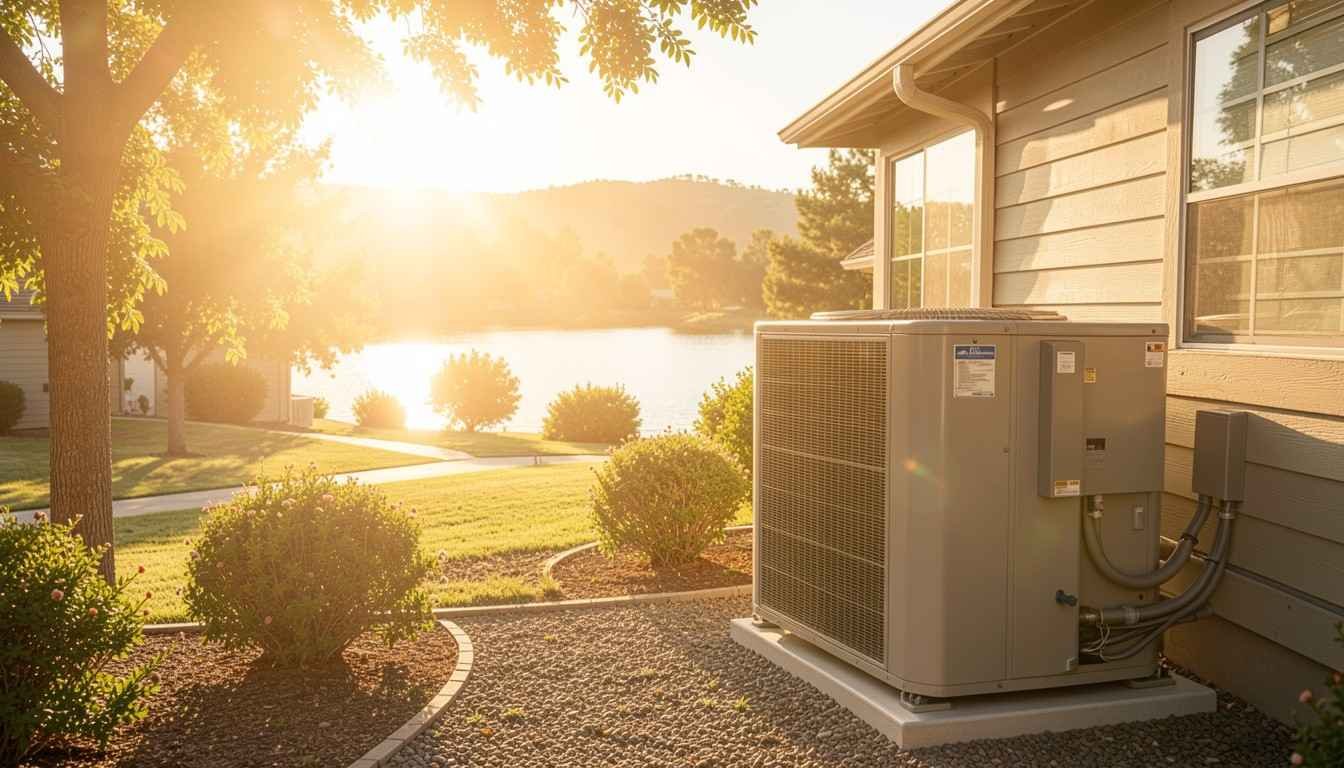
If you live in Lake Elsinore, you probably feel like your AC “hangs in there” through June and July, then starts to struggle right when late‑summer heat spikes hit. That pattern is not in your head. Late‑summer heat puts maximum stress on a system that has already run hard for months in a row. Lake Elsinore averages highs around 87°F in August and still stays in the low 80s by September, so your AC rarely gets a light season.
Why Late‑Summer Heat Is So Hard on AC Systems in Lake Elsinore
Late‑summer heat is different from the first warm days of the year. By August and early September, your system has already handled dozens of hot afternoons, high attic temperatures, and long run times. Inland cities like Lake Elsinore stay warmer than the coast and cool down slower at night, which means your AC gets less recovery time during heat spikes.
As a result, any weakness that started in June or July shows up more clearly now. A capacitor that was “borderline,” a coil that was a little dirty, or ductwork that always ran through a hot attic all combine with extra heat to push the system over the edge. That is why you see more no‑cool calls in late summer than earlier in the season.
The Physics of Heat Spikes and AC Stress
Your AC moves heat from inside your home to the outside. During a heat spike, the air outside is already very hot, which drives up the pressure inside the refrigerant circuit and forces the compressor to work harder. Higher head pressure, longer cycles, and less efficient heat rejection all raise the temperature of motors, windings, and electrical components.
If the unit was clean and well‑maintained, it may still handle the spike. However, if the coil is dirty or airflow is restricted, the unit cannot reject heat properly. That is when compressors trip overloads, capacitors fail, and outdoor fans burn out. These failures often show up right in the middle of an August or September spike after weeks of strain.
Why Many AC Systems Enter Late Summer Already Weakened
Most AC systems that fail in late summer do not start the season in perfect shape. They start with skipped spring tune‑ups, dirty condenser coils, old filters, weak capacitors, and minor refrigerant issues. Over time, each of these small problems adds extra load.
Contractors across California report that units with neglected maintenance have shorter service lives and more frequent breakdowns in heat waves. Some estimate that AC lifespan can drop from a typical 12–15 years down closer to 8–10 years in hot regions if maintenance never happens. That is one reason spring AC tune‑ups matter so much in our area.
The “Cumulative Load” Problem: Summer Is a Marathon, Not a Sprint
Think of your AC’s summer as a marathon. The unit may handle the first few miles with ease, but as the miles add up, every small weakness matters more. Each hot week adds heat cycles, motor starts, and compressor run hours.
By late summer, the equipment has already done most of its annual work. Any worn bearing, weak capacitor, or dirty coil now faces the hardest load of the year. That is why the timing of failure often clusters in August and early September rather than May or early June. The heat spike is the last push that reveals the cumulative load.
Why Heat Waves Spike Repair Calls and Wait Times
Heat waves always drive more AC repair calls. In recent seasons, industry reports and local news have described multi‑day waits during major heatwaves and heavy strain on HVAC schedules. Some homeowners wait five to seven days for non‑emergency service when demand peaks.
During late‑summer spikes, you see the same effect. Old systems fail in clusters, parts go on backorder, and overtime and emergency fees become more common. If you want to avoid this, it helps to deal with early warning signs in mid‑summer instead of waiting for the first 100°F‑feeling day. You can also prepare yourself by learning how to read an AC repair estimate before a rush.
Common AC Failure Types That Show Up During Late‑Summer Heat Spikes
The failures you see during late‑summer heat spikes follow clear patterns. Capacitors that start to weaken under heat finally fail. Compressors trip on thermal overload and sometimes do not recover. Fan motors that ran hot for months burn out. Coils that were dirty since spring cause freezing, short cycling, and poor cooling.
You also see refrigerant issues reach a tipping point. A system that worked “okay” with a small leak in June may lose enough charge by late summer that it can no longer keep up. In some cases, that is when homeowners learn how new refrigerant rules and phase‑downs affect their repair options.
Why Late‑Summer Nights Don’t Give AC Systems Enough Recovery Time
Earlier in summer, cooler nights give your AC a chance to rest. By late summer, nights may still feel warm enough that the unit continues to cycle well past sundown. Lake Elsinore’s inland climate keeps evening temperatures higher than coastal spots, especially after heat spikes.
This shorter recovery window matters. Motors and compressors do not cool as much between cycles. Oil circulation and winding temperatures have less time to stabilize. Over days and weeks, that extra strain can be the difference between a unit that survives the season and one that fails in August.
The Role of California Heatwaves and Climate Trends
Climate research shows that heatwaves are becoming longer and more intense across much of the United States, including California. In practice, this means more days where your AC runs near full capacity, higher peak loads, and less relief between events.
Inland communities like Lake Elsinore feel this trend more than coastal zones. Average summer conditions and heatwaves keep systems working harder for more of the year. That is why AC breakdowns and energy bills both climb during big heat years.
How Poor Maintenance Shows Up Exactly When Late‑Summer Heat Hits
Poor maintenance does not always show up right away. A dirty outdoor coil or neglected filter may seem harmless in mild weather. Under late‑summer heat, those same issues raise head pressure and force longer run times.
Many California HVAC companies now use heatwave messaging to stress how much more vulnerable poorly maintained systems are during extreme heat. They see the same story each year. Units that had basic cleaning and checks in spring keep running. Units that never had service line up for emergency calls. If you want a deeper view of how maintenance affects comfort and health, see how AC maintenance improves indoor air quality.
Late‑Summer Electrical and Power Quality Issues
Heatwaves do not just stress AC hardware. They also stress the electrical grid. High demand can lead to voltage dips, brownouts, and more frequent utility events. These conditions are tough on capacitors, contactors, and electronic control boards.
If your home has no surge protection and the AC already has old electrical parts, a late‑summer heat spike with grid issues can be the final push. Lights dim, the unit struggles to start, and a capacitor or board fails under low‑voltage stress. That is why modern AC upgrades often include surge protection and higher‑quality components.
Indoor Heat Gain Factors That Make Late Summer Worse
Late‑summer failures are not just about outdoor heat. Indoor heat gain plays a big role. Attic temperatures stay high, sun beats on roofs and west‑facing walls, and ducts often sit in hot spaces.
If your attic insulation is thin or your ducts leak, your AC fights both external heat and internal losses. That combination keeps run times long and speeds up wear. In these cases, upgrades like attic insulation and radiant barriers or duct improvements can reduce late‑summer stress as much as equipment changes.
Late‑Summer Failures in Older vs Newer AC Systems
Age matters. A 12‑year‑old system with original parts and older refrigerant is much more likely to fail during a late‑summer spike than a newer, high‑efficiency unit with better protections. Industry articles warn that older equipment is especially vulnerable during extreme heat seasons and may see a surge in failures around the 10–12‑year mark.
Newer systems still need maintenance, but they often include better fan motors, improved compressor protections, and smarter controls. That can delay failure, although no unit is immune. If your AC is already around that age, you may want to compare repairing a 10‑year‑old AC vs upgrading before another late‑summer spike hits.
The Cost Side: Why Late‑Summer Breakdowns Are More Expensive
Breakdowns in August or September often cost more than breakdowns in shoulder season. You pay more in stress, but you may also pay more in money. Higher demand means fewer open appointment slots, more overtime, and sometimes surge pricing for emergency calls.
You also lose control over timing. Instead of planning upgrades, you may be forced into a quick decision because your home is hot. That is where resources like a good HVAC rebate checklist and financing guides such as zero‑down and low‑interest options become very useful.
How Smart Thermostats and Monitoring Help (and Where They Fall Short)
Smart thermostats and monitoring tools do not stop every breakdown, but they can help you see trouble coming. Many models track runtime, show you energy patterns, and provide alerts when the system behaves differently. That can draw your attention to issues before a late‑summer spike hits.
Used correctly, smart controls can also reduce stress by avoiding extreme setpoint swings and cutting wasteful runtime. However, they do not fix bad ducts, weak capacitors, or low refrigerant. For a deeper look at this topic, read can smart AC systems actually reduce repair bills.
Why AC Systems in Lake Elsinore Need a Late‑Summer Strategy
Because of local climate, Lake Elsinore homeowners need a full‑season AC strategy, not just a pre‑summer checklist. The heat does not stop on July 4. It carries through August and often into September.
That means you should think about maintenance timing, mid‑season checkups, and how your system handles long stretches of high heat. It also means you should pay attention to early warning signs before school starts, Labor Day plans begin, or late‑summer events bring more people into the house.
What Works to Reduce Late‑Summer AC Failures
Several habits consistently reduce late‑summer breakdown risk. A proper spring tune‑up catches weak parts early. Regular filter changes and coil cleaning keep airflow strong. Smart thermostat use helps avoid unnecessary strain. Attic and duct improvements lower cooling load. Early planning for older systems stops you from gambling on “one more season.”
You can combine these habits with data. If you want to use information to your advantage, read how to use AC runtime and energy data and using smart sensors and zoning. These strategies help you see patterns before they become emergencies.
What Doesn’t Work
Several common responses do not work well. Cranking the thermostat way down during a heat spike does not speed up cooling. It only makes the unit run longer. Ignoring filters and coils all season leaves the system choked when it needs airflow most.
It also does not work to keep patching a clearly failing 12‑plus‑year‑old unit that struggles every late summer. In those cases, you may spend more on repeat repairs and high energy use than you would have spent on a planned upgrade. If you are in that situation, it helps to understand heat pump vs traditional AC repair costs.
How Homeowners Can Read Early Warning Signs Before Late Summer
You can catch many issues before late‑summer stress hits. Watch for longer run times, new noises, hot or cold spots that get worse, short cycling, and weaker airflow in July and early August. If you see these patterns, you have a chance to correct the problem before a heat spike exposes it.
Smart thermostats and energy apps can help you see these trends. If your AC starts running longer in similar weather, or your bill jumps without a clear reason, treat that as a prompt to schedule a checkup. You can connect this approach with what you learn from smart AC repair‑bill strategies.
How a Lake Elsinore AC Company Should Respond to Late‑Summer Calls
During late‑summer spikes, a local AC company needs to triage. True no‑cool calls with vulnerable residents, young children, or health concerns rise to the top. Techs focus on quick safety checks, electrical testing, refrigerant levels, and airflow to decide whether a repair is simple or if the system has deeper issues.
An honest company will also help you decide whether another repair makes sense or whether you should start planning a replacement, based on age, condition, and cost history. That is where content such as zero‑down and low‑interest options and refrigerant rule guides helps you make informed choices.
When It Makes Sense to Replace Instead of Repair Late in the Season
Sometimes the most cost‑effective late‑summer move is to replace instead of repair. This is especially true if the system is 10–15 years old, has a history of late‑summer breakdowns, uses a refrigerant that is being phased down, or now needs a major repair that costs a large share of a new unit.
Replacing before the next season can help you avoid another stressful breakdown and position you for rebates and improved efficiency. If you plan ahead using tools like an HVAC rebate checklist, you can soften the financial impact and choose equipment on your schedule instead of under emergency pressure.
A Local Conversion Section That Does Not Sound Pushy
If your AC has a habit of struggling or failing during late‑summer heat spikes in Lake Elsinore, you do not have to wait for the next wave to see what happens. You can use maintenance, data, and smart planning to get ahead of the problem.
At Air Conditioning Repair Lake Elsinore, you can get help assessing whether your system needs a tune‑up, a targeted repair, or a replacement plan before peak heat returns. If you want someone to look at your unit and talk through options without pressure, you can reach out through the contact page.
FAQs
Why does my AC always seem to fail at the end of summer instead of the beginning?
Your AC often fails at the end of summer because the system already carried months of heat load and wear. Late‑summer heat spikes apply maximum stress to parts that may have been weak since early in the season, so that is when they give out.
Are late‑summer AC breakdowns more common during heat waves?
Yes. Heat waves increase outdoor temperatures and indoor loads, which push many systems to run at or near capacity. Industry reports show clear spikes in repair calls and longer wait times during major heat events.
How does a heat spike actually damage my AC system?
A heat spike raises head pressure in the refrigerant system and forces the compressor and fans to work harder and longer. This extra stress can overheat motors, weaken capacitors, and worsen existing problems with airflow or refrigerant charge.
Will a spring tune‑up really help prevent late‑summer failures?
Yes, in many cases. A spring tune‑up can catch weak capacitors, dirty coils, low refrigerant, and other issues before they face peak heat. That lowers the chance that these weaknesses turn into late‑summer breakdowns.
Do more AC systems fail in August in Lake Elsinore than in June?
Repair demand generally rises later in the cooling season because systems have more hours on them and heat spikes are often stronger. Lake Elsinore’s climate keeps August especially hot, which increases failure risk compared with early summer.
Can a smart thermostat help my AC survive late‑summer heat spikes?
A smart thermostat can help by reducing wasted runtime, avoiding extreme setpoint swings, and giving you early warnings through runtime and temperature patterns. It does not guarantee survival, but it supports better habits and earlier action.
How can I tell if my system is too old to trust for another late‑summer heat wave?
Look at age, repair history, energy bills, and performance. If your unit is 10–15 years old, breaks down often, costs more to run, and struggles on hot days, it may be time to compare repair versus replacement before another heat spike.
Is it cheaper to replace my AC before or after a late‑summer breakdown?
In many cases, it is cheaper to plan replacement before a breakdown. You can compare options calmly, use rebates, and avoid emergency premiums. Waiting for a breakdown often means less choice and higher urgency costs.
What maintenance should I schedule before late summer to reduce failure risk?
You should schedule a full AC tune‑up that checks coils, filters, refrigerant levels, electrical components, drains, and airflow. You should also keep filters clean and clear debris from the outdoor unit.
What should I do first if my AC fails during a late‑summer heat spike?
First, check the thermostat settings, filter, breaker, and obvious issues like a blocked outdoor unit. If those look normal and the system still does not cool, contact a local AC repair company and describe the symptoms clearly so they can prioritize the call.