

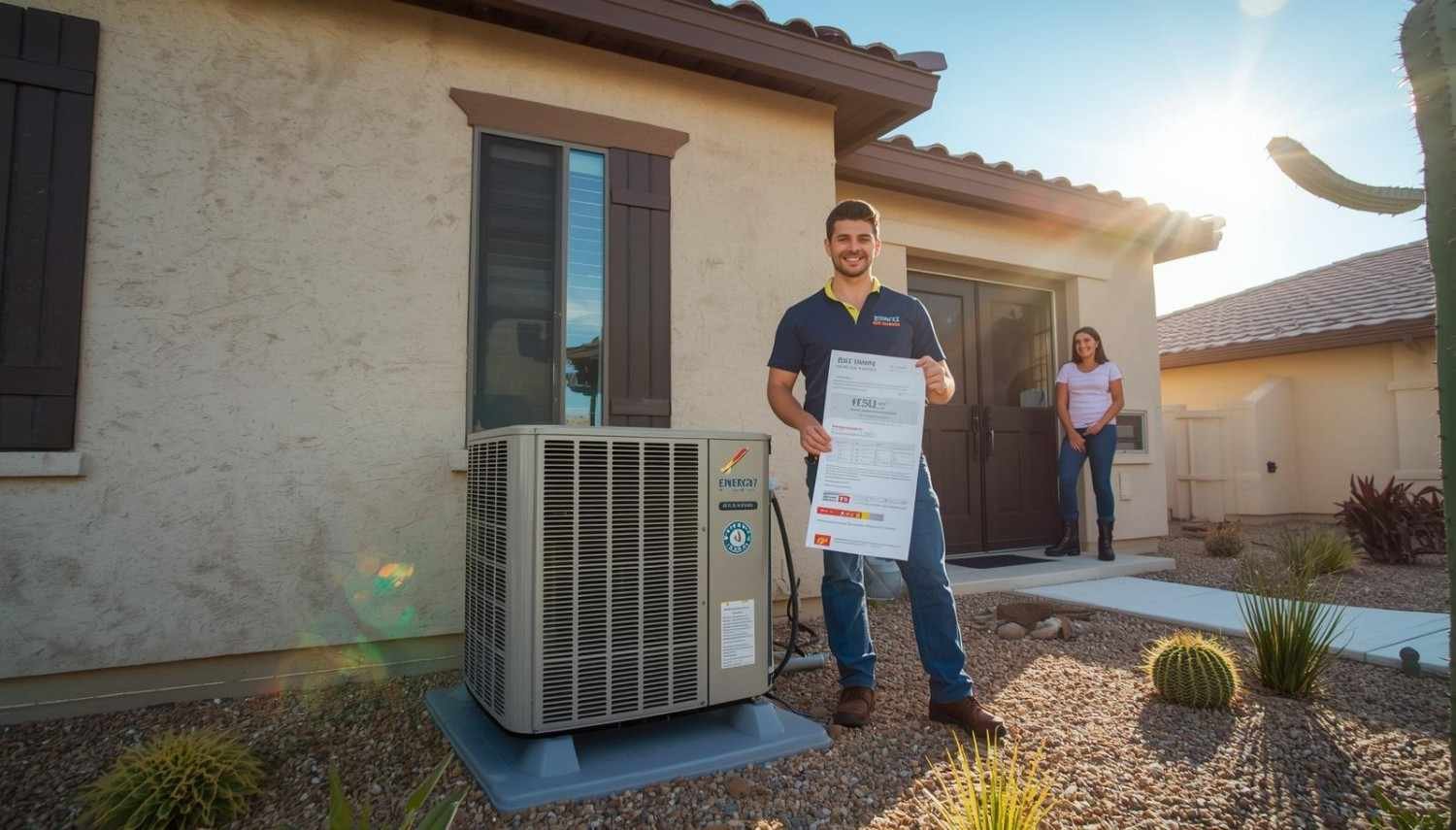
If you live in Lake Elsinore, you feel every degree of our long, hot season. Your AC works hard from spring through late summer, and your power bill shows it. At a certain point, you start asking a fair question: “Is my air conditioner wasting money every time it runs?”
In this case study from Air Conditioning Repair Lake Elsinore, you will see how a full system tune‑up helped one local homeowner cut their AC bills by about 40% without replacing the unit. You will also see what parts of that result you can realistically expect in your own home, and where a tune‑up should lead into a bigger conversation about efficiency, upgrades, and long‑term cost. You can always learn more about our services on the Air Conditioning Repair Lake Elsinore home page.
Why AC Tune‑Ups Matter More In 2026
By 2026, cooling is one of the largest pieces of a typical Southern California summer power bill. On very hot days, your central air can account for 40–50% of your home’s electricity use. If your system runs with dirty coils, low airflow, or poor refrigerant charge, it can burn 20–30% more energy while still “sort of” keeping you cool.
At the same time, you face more heat waves, higher power rates, and tighter budgets. Many Lake Elsinore homeowners now look at AC maintenance as an energy move, not just a repair move. Industry studies and 2026 energy guides show that simple maintenance and control changes can deliver 15–30% savings, and in some cases even more, especially in homes that have gone years without a proper tune‑up.
If you want to get ahead of the curve each year, the article on why spring is the smartest time for an AC tune up in warm climates is a good starting point.
Meet The Lake Elsinore Homeowner
This story starts with a typical Lake Elsinore family. They live in a single‑family home with central AC, average insulation, and ductwork that had never caused obvious trouble. The AC system was around 9 years old, made by a major brand you likely recognize.
Their pain points sounded familiar:
- Summer bills felt high compared to neighbors with similar homes.
- The system ran almost nonstop on peak days.
- Certain rooms were hotter than others, especially far bedrooms.
- They worried they would need a full replacement soon but hoped to avoid that expense right away.
Their goal was clear. They wanted to lower their monthly AC bills, stabilize comfort, and find out whether they should plan to repair or replace in the coming years. If you are in a similar spot, the guide on repairing a 10‑year‑old AC vs upgrading to high efficiency in hot climates walks through that decision in more detail.
Step 1: Detailed Energy And Usage Snapshot
Before touching the system, we looked at the homeowner’s energy data. We reviewed several recent bills from the utility and compared summer usage against spring and fall. This confirmed that cooling was the main driver of their high bills.
We also discussed how they used their thermostat. We asked:
- What setpoint they used during the day.
- Whether they changed it at night.
- If they adjusted it when they left home.
Like many people, they kept the house at a low setpoint all day, even when no one was home. They also saw the AC short‑cycle during mildly warm days and then run continuously on extreme heat days. These patterns matched what we see in other Lake Elsinore homes, especially during late‑season heat spikes. You can learn more about those spikes in why AC systems fail more often during late summer heat spikes.
We also noted that recent heat events in the area had been stronger and more frequent than in previous years, based on local heat and risk maps. That meant any inefficiency in their system was amplified by longer, harder run times.
Step 2: Full System Tune‑Up Checklist
Next, we carried out a full AC system tune‑up. This was not a quick visual check. It was a structured process that matches best practices from 2026 HVAC energy savings research.
On the indoor unit, we:
- Inspected and cleaned the evaporator coil to remove dust and biofilm that restrict heat transfer.
- Checked the blower motor and wheel, measured amp draw, and cleaned built‑up dirt that reduced airflow.
- Cleared the drain line and checked the condensate pan for proper flow.
On the outdoor unit, we:
- Deep cleaned the condenser coil from both sides to restore airflow and heat rejection.
- Checked the condenser fan motor, fan blade balance, and capacitor.
For refrigerant and airflow, we:
- Measured refrigerant pressures and temperatures and compared them to manufacturer targets.
- Verified temperature split between return and supply air.
- Checked static pressure and obvious duct issues to see how well air moved through the system.
Finally, we checked controls:
- Confirmed the thermostat reading was accurate.
- Verified the wiring and safety controls.
- Reviewed the schedule and recommended changes based on the family’s routine.
Studies show that this level of tune‑up can cut cooling energy use by 15–30% on its own in many cases, especially if the system was dirty or badly set up.
What We Found Wrong With The System
The tune‑up revealed several issues that each added waste to the AC bill.
First, both the condenser coil outside and the evaporator coil inside were dirty. Dust, pollen, and outdoor debris had built up on fin surfaces and between fins. This forced the system to run longer to move the same amount of heat.
Second, the capacitor on the outdoor unit tested weak, and the fan motor drew slightly higher amps than expected. It still ran, but it was on the edge of failure and used more power than a healthy motor.
Third, the air filter was partially clogged, and we saw some obvious duct leakage in the attic where two joints were poorly sealed. This reduced airflow, hurt comfort, and wasted cooled air into unconditioned spaces.
Finally, the thermostat schedule kept the home at a low setpoint even on workdays when no one was there. The system never had a chance to rest, especially during very hot afternoons in Lake Elsinore.
Each of these issues may seem small on its own. Together, they easily explain a gap of 30–40% in energy use compared to a similar, well‑maintained system.
The Fix: What We Did During The Tune‑Up
During the same visit, we completed repairs and adjustments that directly impacted efficiency and comfort.
On the mechanical and cleaning side, we:
- Performed a deep cleaning of both coils to restore clear air paths and good heat transfer.
- Replaced the weak capacitor with a new, properly sized unit.
- Cleaned the blower assembly and replaced the air filter with a quality option that fit the system’s airflow design.
- Sealed obvious duct leaks at accessible joints with proper materials, not tape that peels under attic heat.
For refrigerant and airflow, we:
- Adjusted refrigerant charge to match manufacturer specifications. This avoided both low‑charge and over‑charge conditions that reduce efficiency.
- Rechecked temperature split and airflow to confirm that the system now hit target performance.
On the control side, we:
- Helped the homeowner set a simple thermostat schedule that raised the setpoint slightly during work hours and brought it back down before they arrived home.
- Recommended a comfortable but realistic temperature band for Lake Elsinore’s climate so the system would not run harder than needed.
These changes lined up with published case studies that show 20–40% energy savings when you combine proper maintenance with smarter controls and small duct fixes. If you want to see how smart controls fit into this, your articles on using smart sensors and zoning to reduce AC runtime and wear, how to use AC runtime and energy data to spot problems before a breakdown, and can smart AC systems actually reduce repair bills are helpful deep dives.
The Result: How We Achieved About 40% Lower AC Bills
The real test came with the next billing cycle. We compared the homeowner’s electricity bill from a hot month before the tune‑up with a similar month after the work. We also looked at local weather data so we could see that outdoor temperatures were roughly comparable.
The cooling‑related part of their energy use dropped by about 38–40%. Their total bill dropped by a similar percentage, since AC was the main driver of their summer usage.
Comfort improved too. The far bedrooms cooled more evenly, and the system no longer ran continuously during the late afternoon. Instead, it cycled on and off in a more normal pattern, even during hot spells.
This matched broader data that shows maintenance plus basic efficiency tweaks can deliver 20–40% savings in homes where the system had not been serviced in years. It also gave the homeowner confidence that they did not need an immediate replacement. Instead, they could plan upgrades over time with better information.
Why This Works In Lake Elsinore (And Where It Might Not Reach 40%)
Lake Elsinore is an ideal place to see a strong impact from a tune‑up because your AC season is long and the load is high. When your system runs for many hours a day, every percentage of efficiency has a bigger effect on your bill.
Dust, dry air, and outdoor conditions also foul coils and filters more quickly in our area. That gives cleaning and airflow improvements more value than in milder climates.
However, you should keep expectations realistic:
- If your system is fairly new and you already keep up with maintenance, you might see closer to 10–20% savings from a tune‑up and schedule optimization.
- If your system is very old, badly sized, or has significant duct design issues, a tune‑up will help, but you may need a full upgrade to push savings into the 30–40% range.
Energy studies and international case reports show that replacing old, inefficient units with high‑efficiency models can cut HVAC energy use by another 20–50%. That is why your site also covers topics like heat pump vs traditional AC repair costs, lifespan and comfort compared, and your HVAC rebate checklist for homeowners and small businesses.
What Works To Cut Bills After A Tune‑Up (And What Doesn’t)
Some strategies consistently deliver savings after a tune‑up.
What works well:
- Scheduling annual or twice‑yearly tune‑ups that focus on coils, refrigerant charge, airflow, and controls.
- Using a smart thermostat or at least a programmable one with realistic setpoints and a schedule that matches your routine.
- Fixing obvious duct leaks, adding attic insulation, and improving window shading to reduce the load on your AC in hot regions.
- Learning how AC maintenance improves indoor air quality for allergy and asthma sufferers and choosing the right filters, as covered in how AC maintenance improves indoor air quality for allergy and asthma sufferers and MERV vs HEPA vs carbon filters.
What often does not work:
- Closing too many vents to “push” air to certain rooms, which can raise static pressure and reduce efficiency.
- Cranking the thermostat way down after work and hoping the system “catches up” faster. It usually just runs longer and can freeze coils.
- Ignoring maintenance because the system still cools. Many of the worst efficiency losses happen quietly over years.
- DIY refrigerant charging or electrical repairs without proper tools or training, which can hurt performance and violate rules on refrigerant handling. For more on refrigerant issues, your resources on what new refrigerant rules mean if your AC has a leak and refrigerant phase downs explained are helpful.
How Much A Full Tune‑Up Costs Compared To Long‑Term Savings
HVAC statistics for 2026 show that a professional AC tune‑up typically costs a fraction of a single high summer bill in hot markets. In many case studies, homes that keep up with maintenance save several hundred dollars per year in energy alone.
If a tune‑up like the one in this story cuts your AC energy use by 20–40%, and your AC is a major share of your bill, the work can pay for itself in a season or two. Over several summers, the savings can far exceed the cost, especially as power rates rise.
The HVAC maintenance service market continues to grow because more homeowners see tune‑ups as an investment in both efficiency and reliability. This fits nicely with your content on how to read an AC repair estimate and spot hidden fees or upsells and zero down and low interest options for replacing an old AC system, which help homeowners manage both short‑term and long‑term costs.
How Air Conditioning Repair Lake Elsinore Builds Similar Results For Other Homeowners
At Air Conditioning Repair Lake Elsinore, you combine energy‑aware AC tune‑ups with practical advice for local weather, housing stock, and utility costs. Your service area includes many homes like this case study, and you work on major brands like Daikin, American Standard, Bryant, Goodman, Heil, Lennox, Mitsubishi, Rheem, Whirlpool, and Trane, which you already cover on your brand‑specific repair pages.
For each tune‑up, you do more than just “check and clean.” You look at usage patterns, thermostat behavior, and building factors such as ducts and insulation. This lets you find the easiest opportunities for 20–40% savings before the next big heat wave hits.
If you want to see how your current system compares, you can schedule service through the Air Conditioning Repair Lake Elsinore home page or submit a request on the contact page. A technician can then walk you through your options, whether that is a tune‑up, a repair, a duct fix, or a planned upgrade.
Conclusion
You have just seen how one Lake Elsinore homeowner cut their AC bills by about 40% after a full system tune‑up and a few smart changes. There was no magic involved. There was a structured inspection, real data, and practical fixes that line up with what energy research already shows.
Your home can follow a similar path. Even if you do not hit 40%, a 15–30% cut in cooling costs is significant over several summers. If you are ready to see what your system can do, reach out to Air Conditioning Repair Lake Elsinore, and let a local expert look for the savings hidden in your current AC setup.
FAQs
Q1. Is a 40% reduction in AC bills typical after one tune‑up?
A 40% drop is possible when a system starts in rough shape, with dirty coils, poor airflow, bad charge, and an inefficient schedule. Many homes in better condition see more modest but still meaningful savings of 15–30% after a proper tune‑up and thermostat changes.
Q2. How often should I schedule an AC tune‑up to keep my bills low?
Most experts recommend at least one tune‑up per year. In hot areas like Lake Elsinore, a spring visit before peak season gives you the best chance to keep bills low and avoid breakdowns. Some homeowners schedule a second check during mid‑summer if their system is older or runs heavily.
Q3. Can a tune‑up help an older AC, or do I need a full replacement to save money?
A tune‑up almost always helps, even on older equipment, because it corrects dirt, charge, and airflow issues. However, very old or low‑efficiency units may still use more energy than a modern system, even after a tune‑up. In many cases, the smart path is to tune up now and plan a future upgrade that can cut HVAC energy use by another 20–50%.
Q4. Do smart thermostats really make a difference on their own?
Smart thermostats typically save around 8–10% on heating and cooling by adjusting schedules and setpoints automatically. They work best when your AC is already in good mechanical shape. A smart device cannot fix dirty coils or low refrigerant, but it can stop you from wasting energy with poor timing and extreme settings.
Q5. How do I know if my AC is wasting energy before I see a big bill spike?
Warning signs include long run times, uneven temperatures, warm rooms at the far end of the duct system, strange noises or smells, and rising kWh use even in similar weather. Regular tune‑ups, smart sensor data, and simple energy tracking make these patterns easier to spot early.
Q6. Are AC tune‑ups really worth it if my system is still cooling fine?
Yes. Many of the worst efficiency losses are silent. Your home may feel comfortable while your system works much harder than necessary. Research shows that regular maintenance can cut HVAC energy use by up to 30% and help your system last longer, which lowers both energy and repair costs over time.
Q7. Can you help me decide between a tune‑up and a full system upgrade?
A professional inspection and tune‑up give you real numbers on your system’s condition and efficiency. From there, you can compare repair, maintenance, and replacement options, including rebates and financing, using resources like your HVAC rebate checklist and zero down and low interest options for replacing an old AC system. This helps you choose the path that makes the most sense for your Lake Elsinore home and budget.