

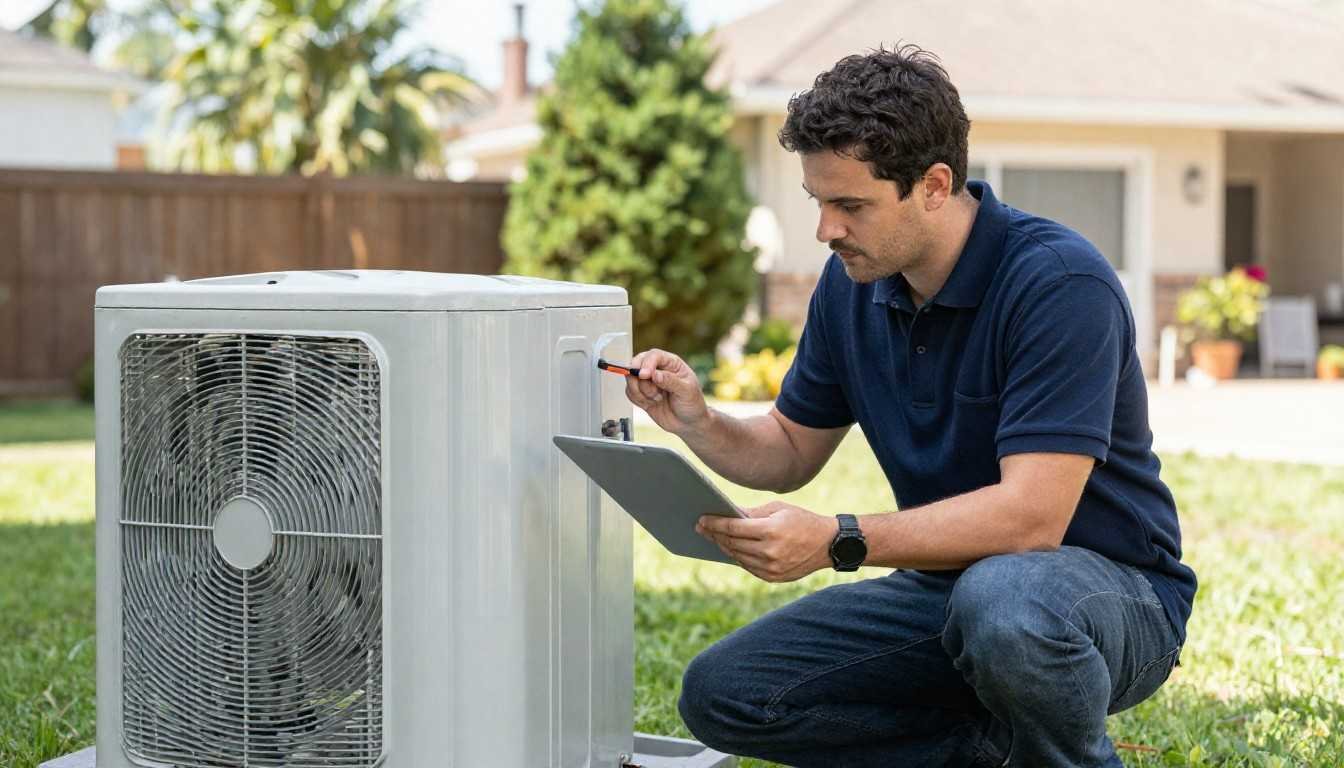
When your AC starts making a weird noise or smell in the middle of a 100-degree day, you don’t have the luxury of waiting until Monday. Heat in Lake Elsinore builds fast, and so does the damage a small problem can cause once your system is pushed to its limit.
A noise that would be a minor annoyance in April can turn into a full system failure in August. The same goes for smells. Your AC works harder during a heat wave than at any other point in the year, and that extra strain exposes weak parts fast.
This guide walks you through the exact noises and smells that mean stop and call someone now, and which ones you can safely keep an eye on. If you want a behind-the-scenes look at how techs handle these calls when the phones are ringing nonstop, check out this look at a day in the life of an AC technician during peak summer.
Is It a True Emergency? The Decision Framework
Not every strange sound means your AC is about to fail. But some do, and knowing the difference saves you money and keeps your home safe.
The 3-Question Safety Test
Ask yourself three quick questions when something feels off. First, could this cause a fire or expose you to a harmful gas? Second, could running the system another hour cause expensive damage to the compressor or motor? Third, if you shut the system off, how long until the heat inside your home becomes unsafe for the people or pets inside?
If the answer to any of these is yes, treat it as an emergency. If all three answers are no, you likely have time to schedule a regular appointment instead of an emergency one.
Does the Cost of Waiting Change Your Decision?
Sometimes a small issue left alone for a day or two turns into a much bigger repair bill. A loose part that rattles today can strip a bearing by next week if you keep running the system.
Waiting rarely saves you money once a warning sign shows up. A quick diagnostic visit from your local AC repair Lake Elsinore team usually costs far less than the repair bill from a problem you let run unchecked through a heat wave.
AC Noises That Are True Emergencies
These sounds mean you should shut the system off and call for help. Running the unit while these noises continue can turn a repair into a full replacement.
Loud Banging or Clanking
A hard banging or clanking sound usually points to a broken part inside the compressor, like a piston or connecting rod. This is one of the most expensive components in your system, and running it while damaged makes the repair worse.
Turn the unit off right away if you hear this. Continued operation can destroy the compressor completely, which often means a full outdoor unit replacement instead of a repair.
High-Pitched Screeching or Squealing
A screeching or squealing noise almost always means a belt is slipping or a motor bearing is failing from lack of lubrication. Left alone, the belt can snap or the motor can seize.
This one often gets worse fast, sometimes within a single day of heavy summer use. Don’t assume it will go away on its own.
Hissing or Bubbling Sounds
Hissing or bubbling near your indoor or outdoor unit usually points to a refrigerant leak. Refrigerant runs at high pressure, and a leak means your system is losing the ability to cool your home while also releasing a substance that shouldn’t be breathed in around a busy compressor.
Refrigerant leaks also tend to get worse the longer they run, so this isn’t something to put off. A trained tech needs to locate the leak, seal it, and recharge the system properly.
Buzzing or Electrical Crackling
A buzzing or crackling sound often means an electrical component like a contactor or capacitor is failing. This can also point to loose wiring, which raises the risk of a short or an electrical fire.
Shut the unit off at the breaker if you hear this sound, especially if it’s paired with any burning smell. Electrical issues in AC units are one of the more common causes of house fires during extreme heat months.
Rapid Clicking That Won’t Stop
A single click when your AC starts or stops is normal. Rapid, repeated clicking that doesn’t stop is a different story. It usually means an electrical control is failing and trying to engage the system over and over.
This puts stress on your compressor and wiring every time it happens. Get it checked before the cycling causes a bigger failure.
Rattling Paired with a Burning Smell
Rattling on its own might be a loose panel. Rattling combined with a burning smell is a different situation entirely, and it usually points to a motor that’s overheating and starting to break down internally.
This combination is one of the clearest signs of an active emergency. Shut the system down immediately and don’t turn it back on until a technician inspects it.
AC Noises That Sound Alarming But Usually Aren’t Emergencies
Not every unusual sound means trouble. Some noises are just part of how your AC normally runs, especially during long stretches of extreme heat.
Clicking on Startup/Shutdown
A single click when your thermostat kicks the system on or off is the sound of a relay switching. This happens every cycle and is completely normal.
The key difference is frequency. One click at start and stop is fine. Rapid, repeated clicking is not.
Mild Humming or Vibration
A low, steady hum is often just your compressor doing its job. A mild vibration can also come from a slightly loose access panel, which is a quick fix and not a safety issue.
That said, if the vibration gets stronger over time, it’s worth a look. Some homeowners try workaround fixes like closing vents to push more air elsewhere, but that approach can actually strain your system further, as explained in this piece on why closing vents to force air into other rooms can damage your AC.
Popping from Ductwork on Hot Afternoons
If you hear popping sounds coming from your ducts on the hottest part of the day, that’s usually just metal expanding and contracting with temperature changes. It’s common in homes with metal ductwork during extreme heat.
This sound is annoying but not dangerous. It doesn’t require an emergency call.
AC Smells That Are True Emergencies
Smells are often a faster warning sign than noises, especially for fire and gas hazards. Take these seriously the moment you notice them.
Burning Plastic or Electrical Smell
A burning plastic smell almost always means wiring insulation, a motor, or a circuit board is overheating. This is a genuine fire risk, not a maintenance inconvenience.
Turn the system off at the breaker immediately, not just the thermostat. If you want the exact steps to follow, this guide on how to safely shut down your AC when you smell burning walks through it clearly.
Rotten Egg or Sulfur Smell
If your AC shares space with a furnace or gas line and you smell rotten eggs or sulfur, treat this as a possible gas leak. This isn’t strictly an AC problem, but it’s serious enough to act on right away.
Leave the area and call your gas company or 911 before calling an HVAC company. Safety comes first here.
Sharp Chemical or Sweet Odor
A sharp, chemical, or slightly sweet smell near your indoor unit often points to a refrigerant leak. Breathing concentrated refrigerant in a closed space can cause headaches, dizziness, and nausea.
Ventilate the area if you can do so safely, then get a technician out to locate and fix the leak. Don’t try to handle refrigerant yourself.
Smoke or Burning Rubber Smell
Any smoke or burning rubber smell is a clear, immediate fire hazard. This usually means a belt, motor, or electrical component has already started to burn.
Get everyone out of the affected area and shut off power to the unit. Call your HVAC company and, if you see actual smoke or flames, call the fire department first.
AC Smells That Need Attention But Aren’t Immediate Emergencies
Some smells are unpleasant but not dangerous. They still deserve a fix, just not a middle-of-the-night emergency call.
Musty or Mildew Smell
A musty smell usually points to moisture sitting somewhere it shouldn’t, often in the drain pan or ductwork. This is more common than people expect, and it changes depending on your local climate. If you’re curious how that plays out here, this breakdown of how dry heat versus coastal humidity affects AC coil and drain problems explains it well.
This isn’t an emergency, but it shouldn’t sit for weeks either. Mold buildup affects your air quality over time.
Dusty “Hot” Smell on First Summer Startup
The first time you run your AC after a long break, you might notice a dusty, warm smell for a few minutes. That’s just dust burning off the heating elements or coils and is completely normal.
It should clear up within 10 to 15 minutes of runtime. If it lingers much longer than that, it’s worth a maintenance check.
Stale, Stagnant Air Smell
A stale or stagnant smell coming through your vents is often just a dirty filter or a drainage issue that’s been building slowly. It’s not dangerous, but it does mean your system isn’t performing at its best.
A simple filter change or drain line cleaning usually clears this up. Schedule it as a regular appointment rather than an emergency one.
Why Extreme Heat Makes These Warning Signs More Dangerous
The same noise or smell that’s a minor issue in spring becomes a much bigger deal once outdoor temperatures climb past 100 degrees.
How 100°F+ Temps Push Compressors and Capacitors Past Their Limits
Your AC’s compressor and capacitor already work near their limits on a normal summer day. Once temperatures climb into triple digits, that margin shrinks fast, and parts that were already weak tend to fail during the hottest stretches.
This is exactly why so many emergency calls come in during heat waves rather than spread evenly through the year. For a deeper look at the pattern, see why AC systems fail more often during late summer heat spikes.
Why AC Failures Spike During Lake Elsinore Heat Advisories
During a heat advisory, every AC system in the area is running close to nonstop. That constant runtime, combined with high outdoor temperatures, is the exact combination that pushes borderline components into full failure.
If your system was already making a questionable noise before the heat spike hit, don’t assume it will hold up through the advisory. It’s more likely to fail at the worst possible time.
How Fast Indoor Temps Climb Once a Failing AC Shuts Down Completely
Once your AC stops working during extreme heat, indoor temperatures can climb into the 90s within a few hours, faster if you have large windows or poor insulation. That’s a real risk for anyone in the home, especially kids, seniors, and pets.
If you have vulnerable household members, it’s worth reading through this guide on keeping pets, kids, and seniors safe during AC outages so you have a plan ready before you ever need it.
Commercial AC Emergencies: What Lake Elsinore Business Owners Should Watch For
Business owners face the same warning signs, but the stakes look different when a failure affects customers, employees, or inventory.
Why Rooftop Commercial Units Show Warning Signs Differently Than Home Systems
Commercial rooftop units are larger and often harder to hear or smell from inside the building. A noise or smell you’d catch immediately at home might go unnoticed in a commercial space until the system has already shut down.
That’s why it helps to have staff trained to recognize sudden temperature changes, odd smells near vents, or unusual sounds from the roof as early warning signs, not just background noise.
When a Noise or Smell Means Shutting Down Operations vs. Staying Open
Some situations call for closing your doors until the system is fixed, especially anything involving smoke, burning smells, or a gas odor. Others, like a musty smell or minor vibration, don’t require you to send customers or employees home.
If you want to see how a real commercial failure played out and how fast a business got back up and running, this case study on office AC failure during a heat wave and how cooling was restored within hours is worth a read.
What to Do Right Now
If you’re dealing with one of the warning signs above, here’s the short version of what to do.
Shut Off the System or Evacuate, Depending on the Warning Sign
For fire, smoke, or gas smells, get everyone out first and worry about the AC second. For mechanical noises like banging, screeching, or hissing, shut the system off at the thermostat, or the breaker for anything electrical, and leave it off until a technician looks at it.
Don’t try to run the system “just a little longer” to stay cool. That decision is what turns a repair into a replacement.
Call a Licensed Lake Elsinore Emergency HVAC Technician (24/7 Availability)
Once the system is off and everyone is safe, call a licensed technician who can get to you quickly. Reach out through the AC repair Lake Elsinore contact page and describe exactly what you heard or smelled so the team can prepare the right parts before arriving.
The faster you get an accurate diagnosis, the faster your home or business gets cool air back safely.
FAQs
Q1. Is it dangerous to keep running my AC if it's making a loud banging noise?
Yes. A loud banging noise usually means a broken internal part in the compressor. Continuing to run the system risks turning a repairable issue into a total compressor failure.
Q2. Can a hissing sound from my AC really be an emergency, or can it wait?
Hissing usually means a refrigerant leak, and it shouldn’t wait. Leaks tend to worsen over time and can affect both your system’s performance and the air quality around the unit.
Q3. What does a burning smell from my AC vents mean?
A burning smell almost always points to overheating wiring, a motor, or an electrical component. Shut the system off at the breaker and treat it as a fire risk until a technician confirms otherwise.
Q4. Why does my AC smell like rotten eggs, and is it a gas leak?
A rotten egg smell near your AC or furnace area can indicate a gas leak. Leave the area, contact your gas provider or emergency services, and don’t attempt to investigate the smell yourself.
Q5. Is a musty smell from my AC actually dangerous to my health?
A musty smell usually points to mold or mildew from trapped moisture. It’s not an immediate danger, but it can affect indoor air quality over time and should be addressed within a few days.
Q6. How quickly can indoor temperatures become unsafe if my AC fails during a heat wave?
Indoor temperatures can climb into the 90s within a few hours of an AC failure during extreme heat, depending on your home’s insulation and sun exposure. This is faster in homes with large west-facing windows.
Q7. Should I turn my AC off or leave it running while waiting for a technician?
For electrical, burning, or gas-related issues, turn the system off immediately. For milder noises without a safety risk, it’s usually fine to leave it off and wait rather than risk further damage.
Q8. Does my AC's age change whether a noise or smell is more likely to be an emergency?
Yes. Older systems have more worn components, which makes them more likely to fail suddenly under heavy summer use. A noise you’d watch on a newer system may need immediate attention on an older one.
Q9. What's the difference between a refrigerant leak smell and a normal musty AC smell?
Refrigerant leaks smell sharp or slightly sweet and chemical. A musty smell is more like damp basement air. If you’re unsure, it’s safer to have a technician confirm which one you’re dealing with.
Q10. Can extreme heat itself cause new noises or smells that weren't there before?
Yes. Heat puts extra strain on compressors, motors, and electrical components, which can bring out problems that were minor or silent during cooler months.