
If you live in Lake Elsinore and have been researching indoor air quality, you have probably seen a lot of claims about UV lights and air scrubbers. Some HVAC companies say they keep your air cleaner, your coils spotless, and your AC maintenance bills low. Others say they are just expensive gadgets with bulbs you have to keep changing.
In this guide from Air Conditioning Repair Lake Elsinore, you will look at UV lights and air scrubbers through a practical lens. You will see what they actually do inside your air conditioner, how they can affect AC maintenance, and when your money might be better spent on tune ups, filters, or duct work. If you want an overview of our core services, you can visit the Air Conditioning Repair Lake Elsinore home page any time.
What UV Lights And Air Scrubbers Actually Do In An AC System
Before you can decide if these products reduce AC maintenance, you need to know what they are built to do.
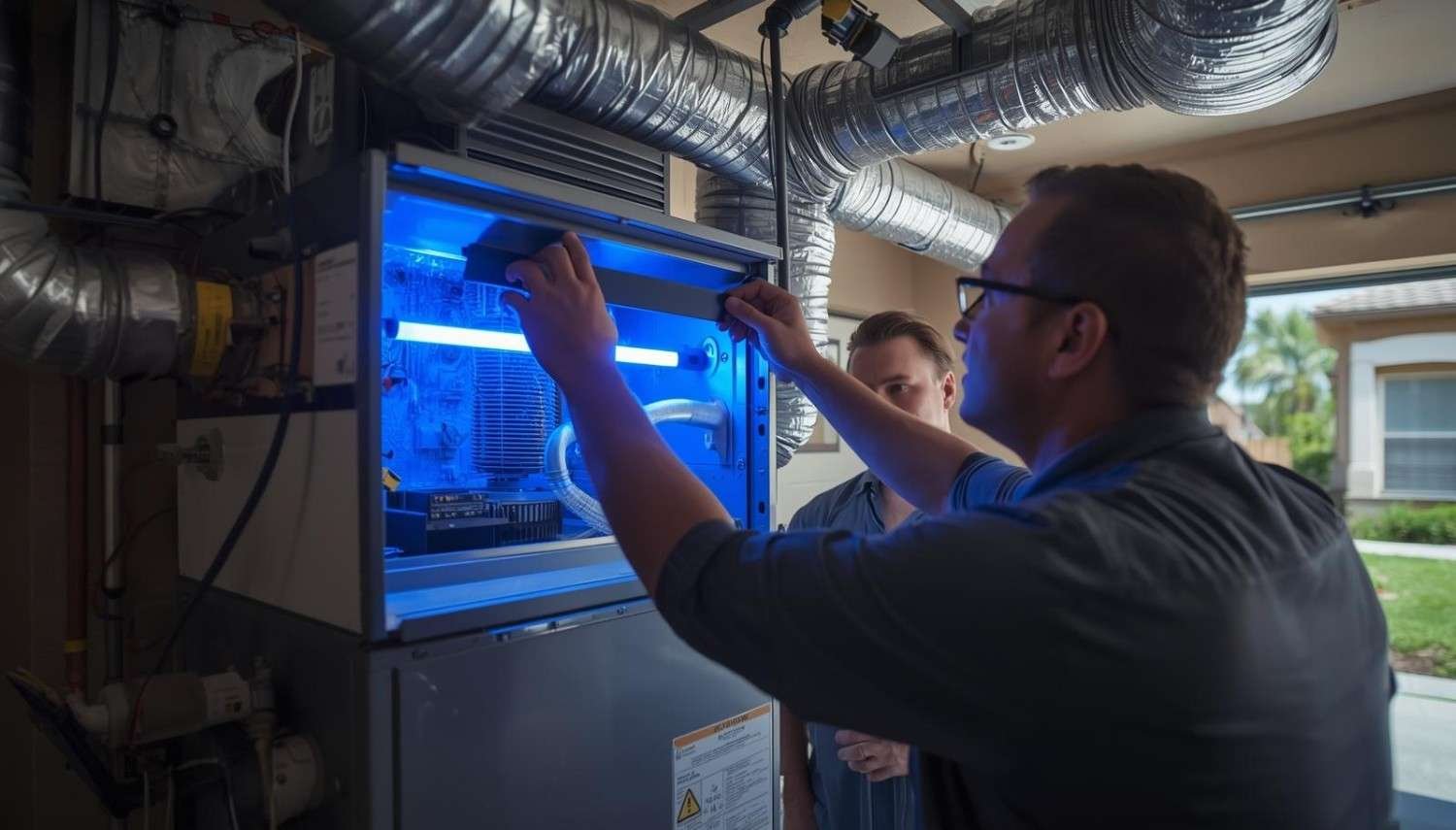
UV lights for HVAC usually use UV‑C lamps mounted inside the air handler, close to the evaporator coil and drain pan. The goal is simple. The UV‑C light hits the wet coil and pan surface and helps kill or deactivate mold spores, bacteria, and other microbes that would otherwise grow there.
Air scrubbers are add‑on devices that sit in your ductwork. They typically combine a filter, UV light, and sometimes a catalytic or ionizing element. As air passes through, the scrubber tries to reduce airborne particles, odors, and some microbes.
These indoor air quality products focus first on air cleanliness. Any maintenance benefit is secondary and comes from the fact that cleaner surfaces and cleaner air are often easier and cheaper to keep up over time. If you want to see how AC maintenance already improves indoor air quality, your article on how AC maintenance improves indoor air quality for allergy and asthma sufferers is a helpful background piece.
How Dirty Coils And Biofilm Drive Up AC Maintenance
Your evaporator coil lives in a perfect little cave for growth. It is dark, cool, and often damp while the AC runs. Over time, dust, skin flakes, cooking vapors, and moisture become food for mold and biofilm.
As this buildup grows on the coil and in the drain pan, several things happen. Airflow drops because the fins are partially blocked. Heat transfer drops because the coil surface is coated with gunk. The drain line starts to carry slime, which can clog and cause leaks. You may also begin to smell a musty “dirty sock” odor each time the system starts.
All of that leads to more AC maintenance. You need professional coil cleanings more often. You need drain line clearing more often. You may even call for duct cleaning if mold spores and odors travel through your vents. In a place like Lake Elsinore, where your AC runs many hours on hot days, that kind of growth can develop faster than you expect.
The Case For UV Lights: Do They Cut Coil Cleaning And Drain Issues?
Research and field experience over many years show that UV‑C lights placed correctly near evaporator coils can greatly reduce microbial growth on those surfaces. Several 2025 and 2026 guides show that coils with UV tend to stay much cleaner between manual cleanings.
In practice, this often leads to:
- Less visible mold and slime on the coil and pan.
- Fewer musty odors when the AC runs.
- Slower buildup in the drain line, which can mean fewer clogs.
Some case reports and manufacturer data also suggest that cleaner coils help maintain system efficiency over time. A clean coil transfers heat better, so the AC can hit the set temperature with less runtime.
However, UV lights are not zero‑maintenance. Bulbs lose germicidal strength long before they stop glowing. Most HVAC UV bulbs need replacement every 12 to 24 months to stay effective. The fixtures also need an occasional check to make sure the lamp still shines on the coil and pan as intended.
So you may reduce expensive coil cleaning and drain emergencies, but you add a small, predictable bulb replacement task. That can still be a smart trade if you have a history of coil and drain problems.
The Case For Air Scrubbers: Do They Reduce Dust And Filter Strain?
Air scrubbers take a broader approach. They sit in the ductwork and treat air as it moves through the system. Some use UV and a special catalytic surface to neutralize certain pollutants. Others create charged particles that clump together, making it easier for filters to catch them.
From a maintenance perspective, the promises you often hear include:
- Lower dust levels in the home.
- Less dust on fan blades, blower housings, and coils.
- Longer life for filters because large particles clump and drop out more easily.
In practice, air scrubbers can help with fine particles and odors, and they can slightly reduce how much debris ends up on internal components. They can be useful for homes with strong odor concerns or allergy issues.
But they do not remove pet hair, heavy dust from construction, or all allergens by themselves. You still need a proper filter strategy, like you see in your guide on MERV vs HEPA vs carbon filters, and you still need regular filter changes. Air scrubbers assist your filters. They do not replace them.
What The Data Says In 2026 About Maintenance And Energy Savings
By 2026, the data picture is clearer than it used to be.
Several HVAC and indoor air quality studies show that UV lights can reduce fungal growth on coils and in drain pans. Some report energy savings between 10 and 25 percent in systems that had heavy microbial buildup before UV installation. Laboratory and healthcare studies also show that germicidal UV can cut microbial load on surfaces in air handlers and ducts.
The story about maintenance visits is more practical than scientific. Contractors report fewer “dirty coil” and “slimy drain” service calls in homes where coil UV lights have run consistently for years. That suggests UV lights do reduce certain maintenance tasks, especially deep coil cleaning.
However, no serious research says you can skip regular tune ups because you have a UV lamp. You still need annual or semiannual visits to check refrigerant, electrical parts, safety controls, and overall system performance.
Energy savings and maintenance benefits also depend heavily on correct design and placement. A weak lamp mounted too far from the coil, or blocked by sheet metal, will not deliver much value.
Where UV Lights And Air Scrubbers Work Well (And Where They Disappoint)
You get the most from UV lights and air scrubbers when you have specific problems they are built to solve.
You tend to see good results when:
- Your coil or drain pan has had mold or biofilm issues in the past.
- You have had repeated drain clogs or “dirty sock” smells.
- Your system runs many hours a day, so keeping the coil clean has a big payoff.
- You or someone in your home has asthma, allergies, or immune concerns and wants cleaner air along with fewer odors.
You are more likely to be disappointed when:
- You expect UV lights to fix bad duct design, low airflow, or poor filtration.
- The installer places the lamp where the light does not hit the coil directly or uses low‑quality equipment.
- You never replace the bulb and assume “it still glows, so it still works.”
The same is true for air scrubbers. If you buy one to solve a serious duct leak or insulation problem, you will likely feel let down. Those issues need duct sealing or building improvements, not only IAQ add ons. Your articles on when AC repair should include a duct inspection and cleaning and when poor duct design is the real cause of hot and cold spots explain those root causes very well.
Cost And Maintenance Math: Do They Really “Reduce Maintenance”?
To decide if UV lights or air scrubbers reduce AC maintenance for you, you have to look at the numbers.
For UV lights, you usually pay a few hundred dollars for equipment and installation, with some premium systems costing more. Then you budget for bulb replacements every 1 to 2 years. The lamps use a small amount of electricity, similar to a light bulb.
If UV lights prevent one or two deep coil cleanings and several drain emergencies over a span of years, they can pay for themselves while also keeping your air fresher. You still pay for yearly tune ups, but the work can be simpler and faster because the coil is cleaner.
For air scrubbers, the cost is often similar or higher, depending on the technology. They can reduce odors and fine particles, which many homeowners find valuable. From a maintenance perspective, they may reduce dust buildup and help your filters work better, but they do not remove the need for filter changes or system checks.
So the honest answer is this. UV lights and air scrubbers can reduce certain kinds of maintenance, mainly heavy coil cleanings, musty odor complaints, and biofilm drain issues. They do not reduce the need for regular AC tune ups, and they add their own bulb or module maintenance.
Lake Elsinore‑Specific Nuances: Dry Heat, Dust, And IAQ Add‑Ons
Lake Elsinore has a mix of dry heat and indoor moisture sources. Your outdoor air is often dry and dusty, but your indoor air contains moisture from showers, cooking, laundry, and people. Over time, that moisture still condenses on the cold coil and creates conditions for microbial growth.
Inland Empire homes also deal with dust and pollen. If you have pets, open windows often, or live near busy roads or construction, your AC filter has to work hard. That means you cannot rely on UV alone. You still need a good filter strategy and a plan for ducts, insulation, and air sealing.
The indoor air quality pages from other Lake Elsinore providers show how popular IAQ add ons have become in our area. That makes clear guidance from a trusted local contractor even more important. At Air Conditioning Repair Lake Elsinore, you can combine IAQ options like UV and scrubbers with practical basics like tune ups, duct inspections, and attic improvements, which you cover in how attic insulation and radiant barriers reduce AC repair calls in hot regions.
How Air Conditioning Repair Lake Elsinore Evaluates UV Lights And Air Scrubbers For Your Home
Instead of pushing a one size fits all solution, you start with the system you already have.
A typical evaluation includes:
- A visual and camera inspection of the evaporator coil and drain pan.
- A look at past service history for drain clogs, mold, or odor complaints.
- A review of duct condition, filter type, and replacement habits.
- A conversation about allergies, asthma, pets, and odor concerns in the home.
From there, you can see whether UV lights, air scrubbers, or both make sense on top of a strong maintenance plan. You make it clear that these devices are add ons, not replacements, for regular service.
You also help homeowners compare IAQ upgrades with other investments like smart thermostats, zoning, or even new equipment. Your articles on using smart sensors and zoning to reduce AC runtime and wear, how to use AC runtime and energy data to spot problems before a breakdown, can smart AC systems actually reduce repair bills, and how we cut a homeowner’s AC bills by 40% after a full system tune up all fit into that bigger efficiency picture.
If someone wants to talk through options, they can easily reach you through the about us page or the contact page and ask specific questions about UV lights and air scrubbers.
What Still Matters Even If You Install UV Lights Or Air Scrubbers
Even if you install the best UV light and the fanciest air scrubber, your AC still needs core maintenance. UV does not clean dirt, dust, or pet hair from your system. It targets living organisms, not general grime.
You still need to:
- Change filters on time and pick the right MERV rating for your system. Your guide on MERV vs HEPA vs carbon filters walks through realistic options.
- Schedule regular AC tune ups for coil checks, refrigerant checks, electrical tests, and safety controls.
- Have ducts inspected and cleaned if there are signs of contamination or long‑term dust buildup, as covered in when AC repair should include a duct inspection and cleaning and common AC problems in older homes vs new construction.
If you skip those basics, UV lights and air scrubbers will only do so much. The best results always come from a full plan that includes good equipment, smart operation, and consistent care.
Should You Invest In UV Lights Or Air Scrubbers… Or Spend That Budget Elsewhere?
You can use a simple decision tree to decide where your next dollar should go.
UV lights usually make the most sense if:
- You have had repeated mold, slime, or musty odor issues from the coils or vents.
- Your technician has documented microbial growth on the evaporator coil or in the drain pan.
- You have health concerns or want to keep the coil as clean as possible between visits.
Air scrubbers usually make sense if:
- You are sensitive to odors from cooking, pets, or smoke.
- Your home already has decent ducts and filters, and you want one more layer of air cleaning.
If your main problem is high energy bills, poor comfort, or constant repairs, your money may work harder in:
- A full AC tune up and airflow check.
- Duct sealing or redesign.
- Attic insulation and radiant barriers.
- Planned equipment upgrades with the help of your HVAC rebate checklist and zero down and low interest options for replacing an old AC system.
A technician from Air Conditioning Repair Lake Elsinore can walk you through these options and help you decide whether UV lights, air scrubbers, or more basic work should come first.
Conclusion
So, do UV lights and air scrubbers actually reduce AC maintenance? The honest answer is yes, in some ways, for some homes, and no, in others. UV lights tend to reduce heavy coil cleaning and drain issues. Air scrubbers can cut certain particles and odors and may slow dust buildup. But neither option replaces a solid AC maintenance plan or fixes deeper issues like bad ducts or poor insulation.
If you live in Lake Elsinore and want clear guidance instead of marketing hype, Air Conditioning Repair Lake Elsinore can help you build a plan. That plan may include UV lights or air scrubbers, or it may focus first on tune ups, filters, ducts, and energy upgrades. You can start that conversation any time through the Air Conditioning Repair Lake Elsinore home page or the contact page.
FAQs
Q1. Do UV lights in my AC really reduce the need for coil cleaning?
UV lights that shine directly on the evaporator coil and drain pan can greatly slow or prevent mold and biofilm growth. That often means fewer deep coil cleanings and fewer drain clogs. You still need regular tune ups to confirm everything works correctly.
Q2. Will an air scrubber lower my AC maintenance costs?
An air scrubber can reduce certain airborne contaminants and odors, which may help keep internal surfaces cleaner and reduce some cleaning tasks. However, you still need filter changes and tune ups, so it usually trims some maintenance, rather than removing it completely.
Q3. How often do UV bulbs need to be replaced?
Most HVAC UV bulbs need replacement every 12 to 24 months. Their germicidal output drops steadily, even if they still glow. Replacing the bulb on schedule is key if you want real performance and any maintenance benefit.
Q4. Can UV lights and air scrubbers replace duct cleaning?
They can reduce new microbial growth on coils and in the air handler, and they may reduce how often you need duct cleaning. But they do not remove dust or debris already in the ducts. If your ducts are dirty, you still need proper cleaning and then UV or other tools to maintain cleaner conditions.
Q5. Are UV lights and air scrubbers safe for my family and pets?
Reputable HVAC UV systems are sealed inside the air handler or ducts, which keeps UV‑C light away from direct eye and skin contact. As long as a professional installs them and follows manufacturer instructions, they are considered safe for homes with kids and pets.
Q6. Do these products lower my energy bills as well as my maintenance?
By keeping coils cleaner and airflow more stable, UV lights in particular can help systems maintain or even improve efficiency. Some reports show energy savings in the 10 to 25 percent range in previously fouled systems, but results vary by home and system condition.
Q7. How do I know if UV lights or an air scrubber make sense for my Lake Elsinore home?
The best first step is a professional inspection. A technician can check your coil, drain pan, ducts, and filters, ask about odors and allergies, and then compare the cost of UV and air scrubbers with other upgrades that may bring you more value. You can schedule that visit easily through the contact page.